Key Facts
• The client's claims team couldn't get complete information, especially photos, from the people on a claim in a timely way. Non-policyholders had no app access, so everything went through phone calls and email.
• Data showed the fastest-processing simple claims shared one trait: at least 3 photos at submission. Fewer than 20% of claims had 3+ photos for every vehicle.
• We built the Subsequent Notice of Loss (SNOL), a digital form available to everyone on a claim, policyholder or not. Over 80% of claims reached 3+ photos per vehicle enabling the simple claims to process 60% faster.
The Problem
Once a claim was filed, the client's claims team needed information from everyone involved, and photos of the vehicles and damage mattered most. But only policyholders could upload photos into the app at first notice of loss, and for claims submitted over the phone or for non- policyholders, the only channels were phone and email which caused:
• Back-and-forth and missed calls, with adjusters and claimants each waiting on the other.
• Photos and information that took days to arrive, then came in piecemeal or weren't what the adjuster needed.
• Information that's poorly suited to a phone call, like photos of damage, with no good way to send it.
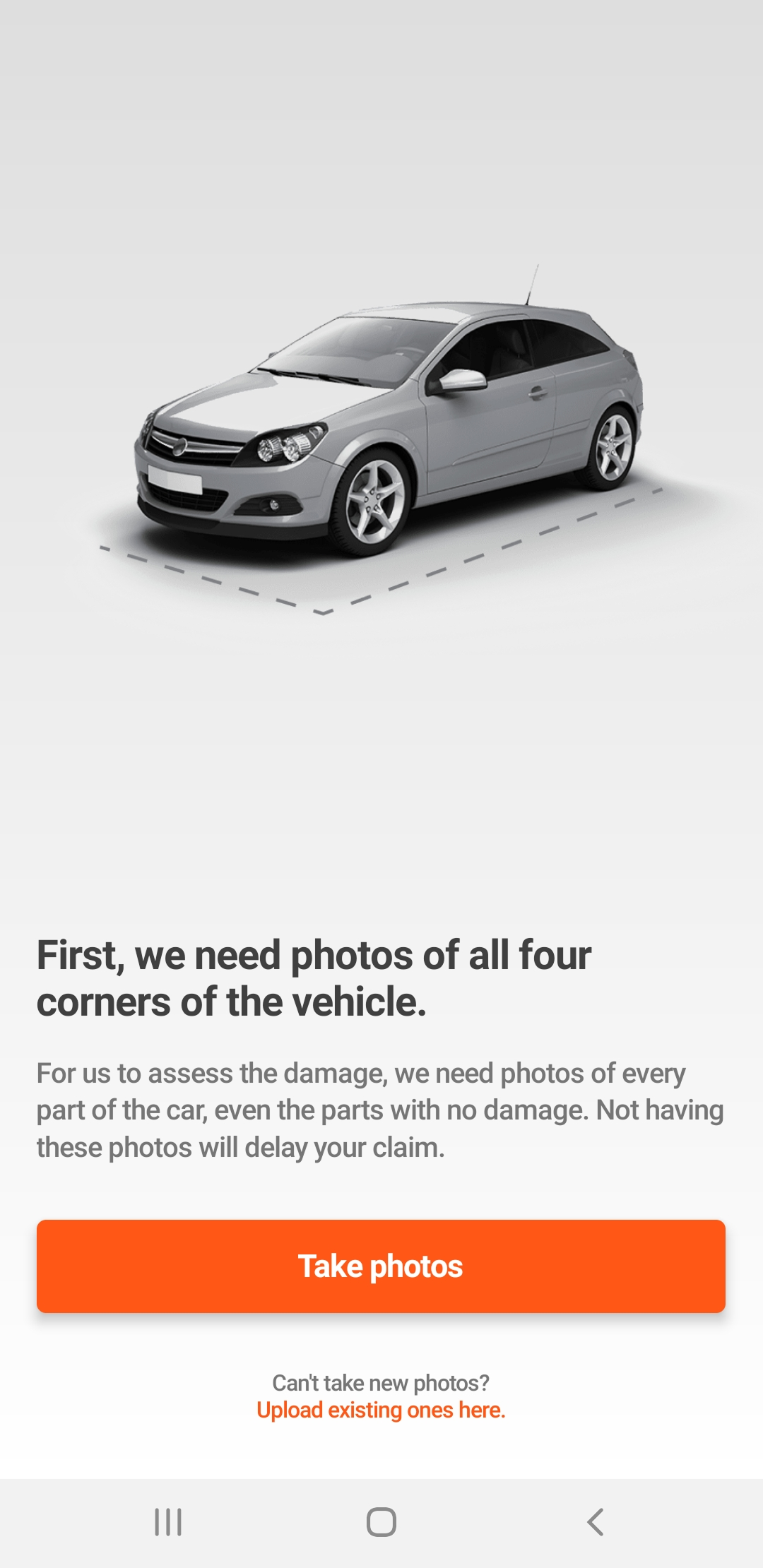
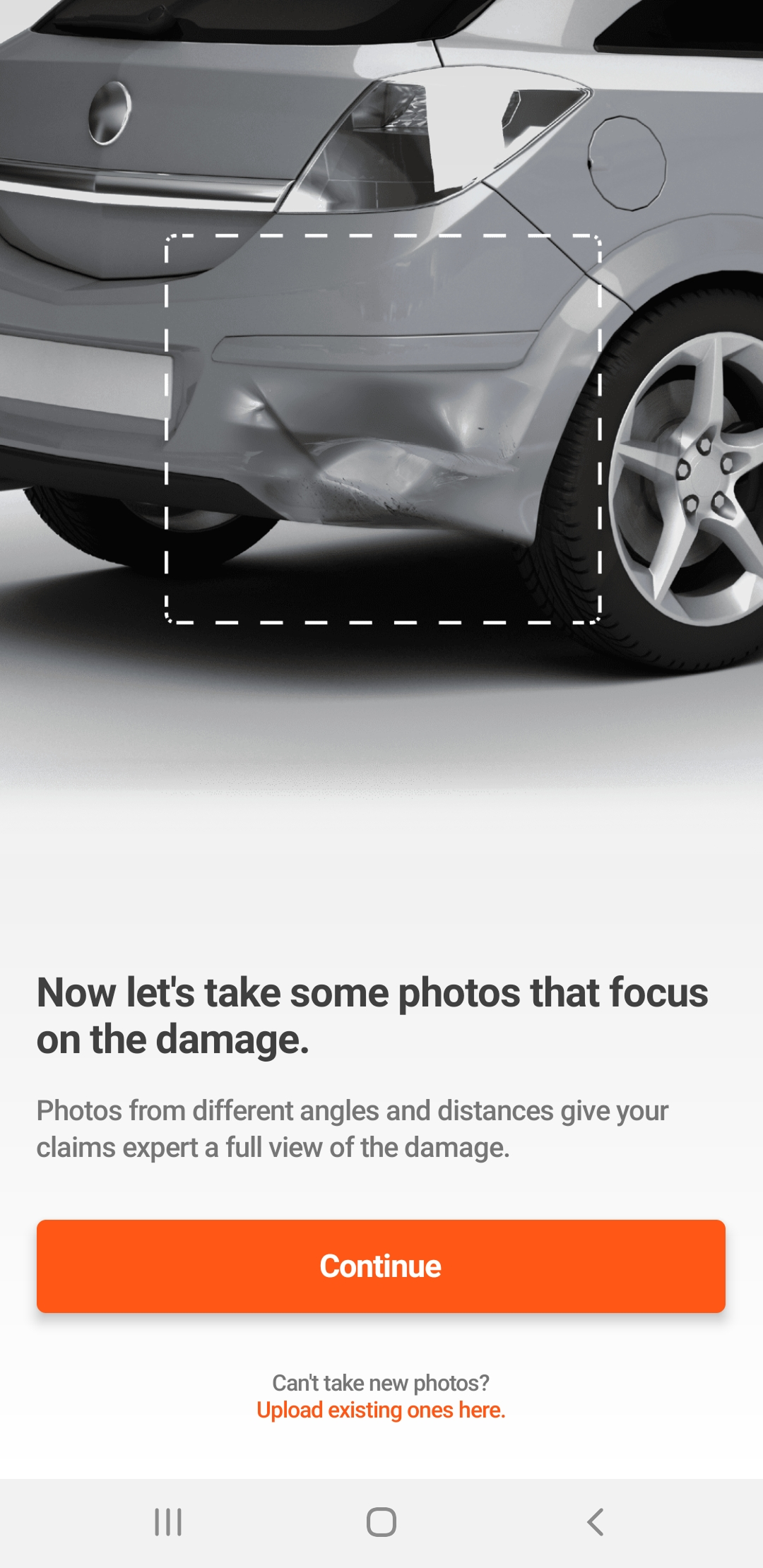
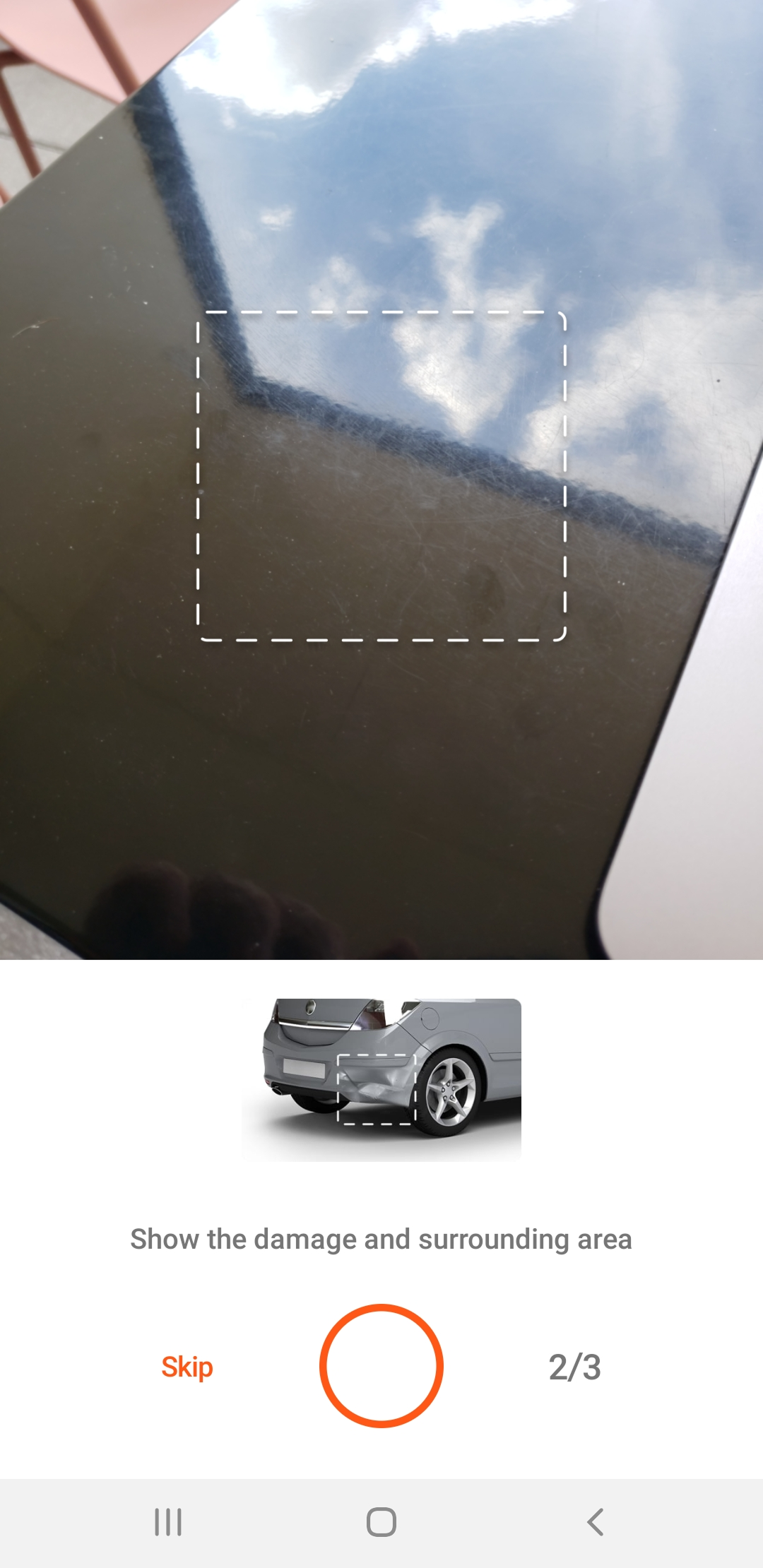
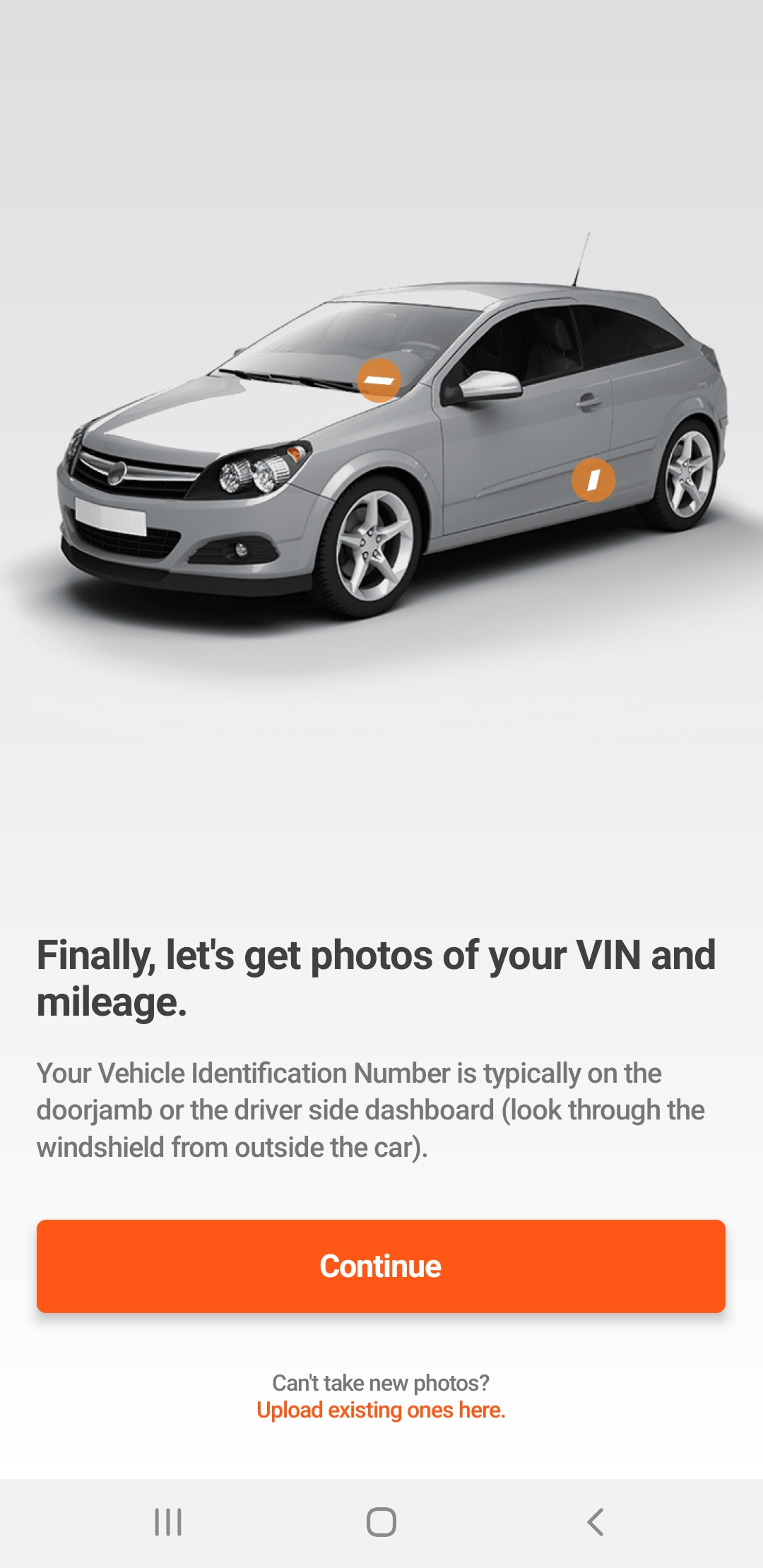
The policyholder app had a great guided workflow for first notice of loss, but after FNOL or for non-policyholders, there was no good option for submitted photos and information
Sketching
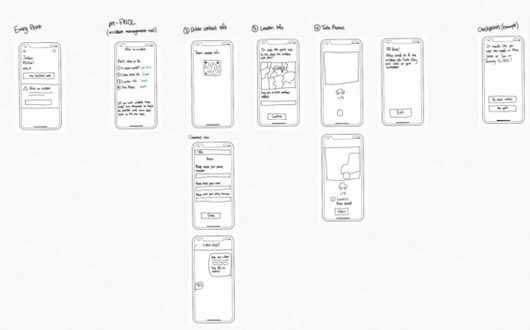
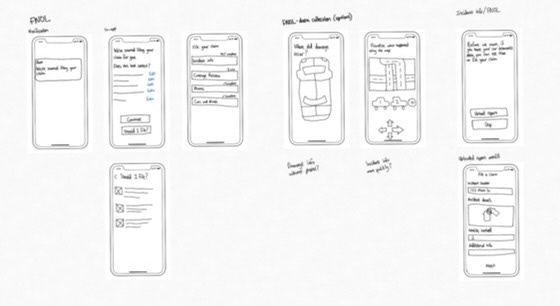
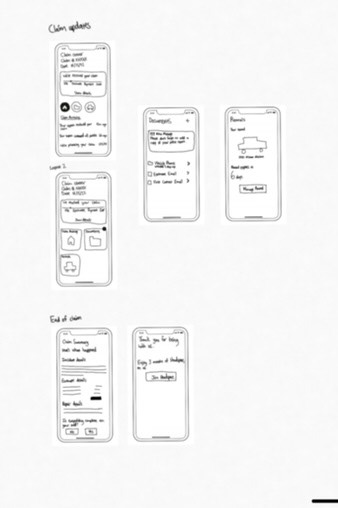
We started from the existing first notice of loss (FNOL) process and first explored changes to the flow inside the app. That would have helped policyholders, but it left non-policyholders out and would have taken longer. We pivoted to a simpler web page opened from a link, which was faster to build and could reach far more claimants. We deliberately took the smallest slice that could work for the most people.
Final Product
SNOL was sent as a link by email, text, or both to everyone on the claim. It confirmed basic information about the customer, their vehicle, and anyone else involved in the incident, and then asked for photos of their vehicle. The list of required photos and the descriptions of each shot carried over from the in-app FNOL flow, so adjusters got the same photos they were already used to receiving. It was the same form for policyholders and non-policyholders.
The in-app FNOL flow walks the user through each photo with a dedicated guided screen. We didn't replicate that for SNOL. Because the link went out by email as well as text, people would open it on desktops as often as phones, and building a guided capture flow that worked well on both, even if optimized for mobile, was too large a scope for what we needed to ship. Instead, SNOL uses a single upload area with a written description of the photos needed. It worked on any device and reached the most claimants, which was the point of the project.
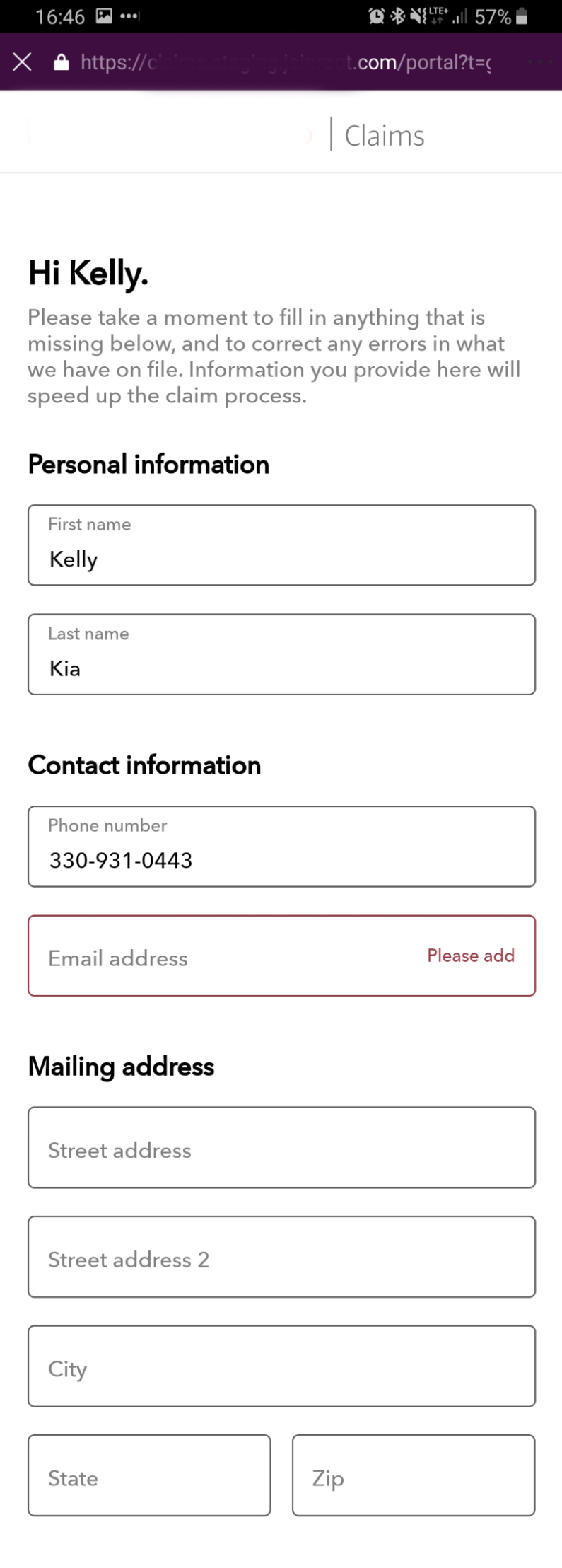
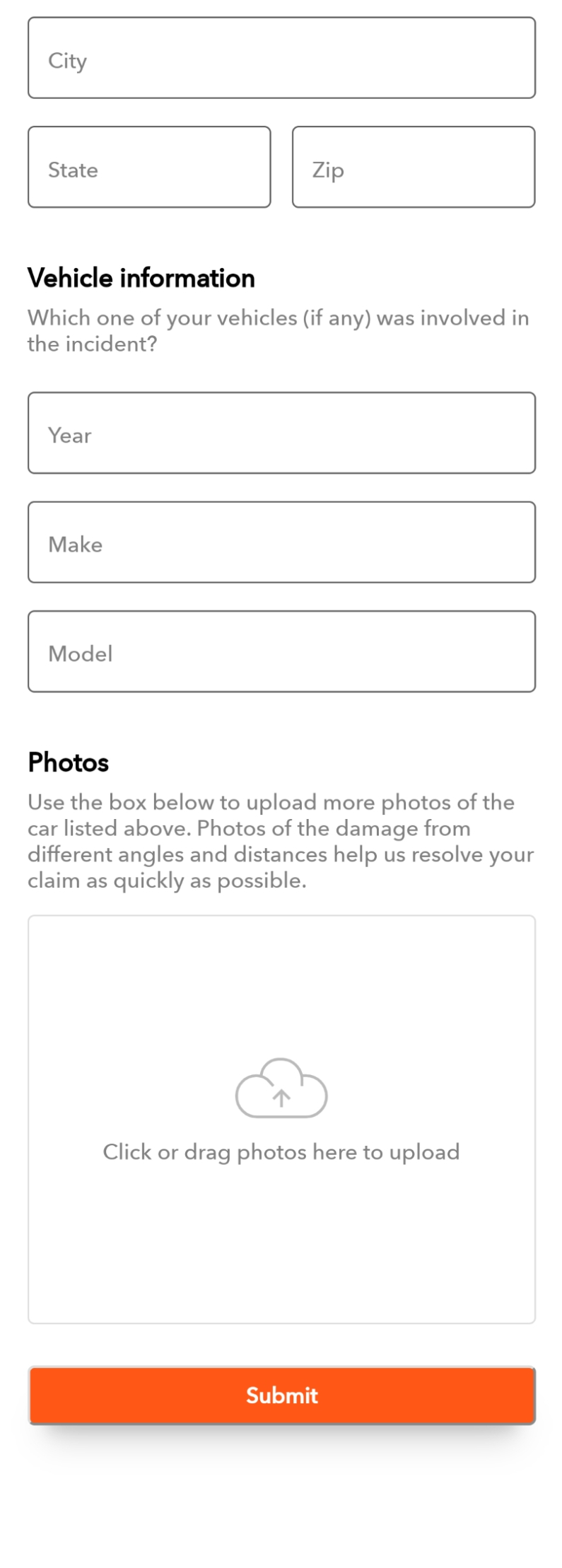
The full SNOL form, which was accessible by email or text on mobile or desktop
Because the information we needed was identical, the form became the blueprint for an internal form that guided adjusters when they reached a claimant by phone. We also enabled texting to the adjuster's own number, so an adjuster could walk a claimant through the photos in real time and the claimant could text them straight into the claim file. This gave claimants live guidance where they wanted it while the web form stayed simple. We launched all of this together, taking a multi-pronged approach that covered every channel a claimant might use.
Results and Next Steps
Before SNOL, under 20% of claims had 3+ photos for every vehicle. After launch, it was over 80%, and most had 6 or more. Simple claims (no total loss, no medical claim) processed 60% faster across the board.
What came after, and what we explored:
• We learned the photos were important to speed because they allowed us to use a 3rd party estimator that was very fast and accurate. Once we had a stable pipeline of photos, we were able to automate the estimate request, making the process even faster.
• We continued to explore even more detailed and guided options for photo and information gathering, including video calls for both FNOL and SNOL, but these were ultimately shelved in favor of faster solutions that gave similar results.
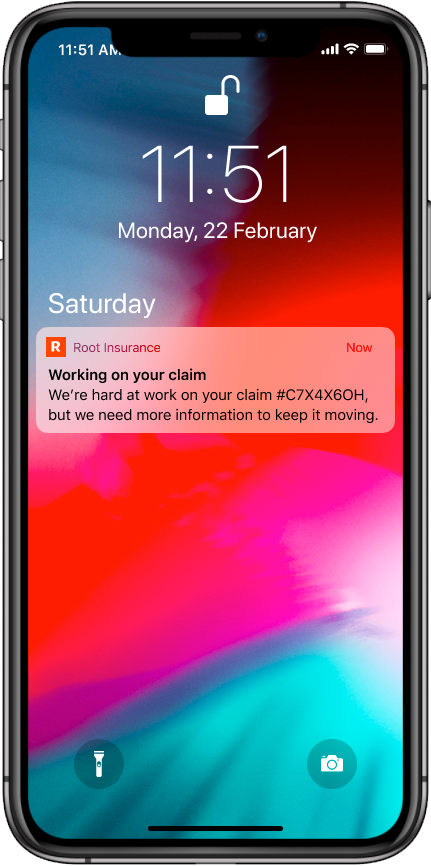
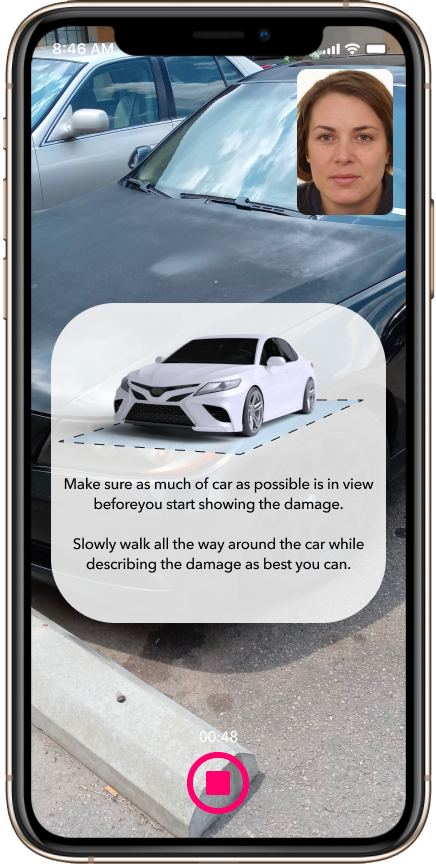
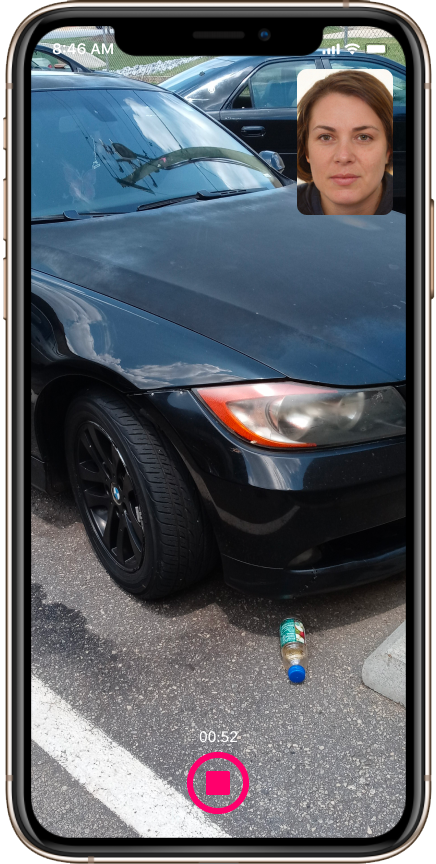
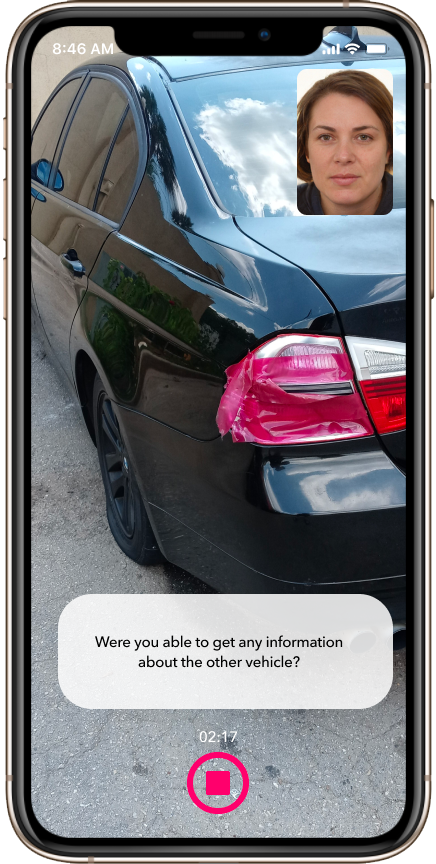
A proof of concept for video FNOL/SNOL that was ultimately shelved in favor of other work